I have retired twice, and I did not do it well either time. I am currently unsure whether I am retired now, which tells you something about how the first two went. This makes me, by my own joking classification, a serial retiree, a funny thing to call yourself right up until you realize you cannot actually answer the question of whether you are working.
I should be honest about that last part up front. My business partner and I are in the early days of launching a veterinary consulting practice, and I write this journal every week, so I am clearly working in some sense. Just not in the have-to-be-somewhere, someone-is-expecting-me sense that organized the first twenty-plus years. Whether that counts as retirement is a question I will leave open, mostly because I cannot answer it.
Here is the harder part to admit. My identity was tied to my title, my role, and the authority that came with both. I did not set myself up for the absence of those things.
And here is the part that should have been obvious to me sooner. I spent years coaching and mentoring people on exactly this. Do not bottleneck your hospital. Do not make yourself the single point of failure. Build systems, train your team on them, and make sure the place runs when you are not standing in it. I believed that and I taught it. I even took pride in what I thought was my own version of it, giving people the chance to learn, handing off skills, empowering the team around me.
What I could not see, as the owner, was that I was still needed. Not in the daily-task way I had trained out of the building, but in some deeper structural way I had never examined. And I must have thrived on it. I built a hospital that did not depend on any one person for the work, and I never noticed that I still depended on the hospital to be the person who was needed.
I want to talk about why retirement did not stick, because I suspect I am not the only one who built an entire self out of being needed.
Where the bar got set
I always admired my father. He was a college professor, and he was one of the fortunate ones. He enjoyed his career. I would argue he never dreaded work a day in his life. Whatever the professional bar is for loving what you do, he set it high, and he set it early, and I watched. He loved the lively back-and-forth with his students, the exchange of ideas, the room getting loud with discussion.
My own path took a detour before it got there. I earned a business undergraduate degree, which has genuinely served me well, and I spent a couple of years in the accounting departments of computer and healthcare companies. Nine to five. Cubicle. Fluorescent lights. Stale, recycled air. It did not take long to know I could not do that for the length of a career. So I reevaluated, landed on the thing that had always been true, that my passion was animals, went back for the science prerequisites, and then went to veterinary school. I loved being a veterinarian. I loved it for a long time.
My father taught me to love the work. It took a neighbor, years later, to show me the other half of the equation, the half I had skipped. He is good at retirement in a way I am not. He putters in his garden. He stays up too late tracking his stocks, which he does for the sport of it as much as the money. He sleeps in without apology. Lately he has been reading his way into Buddhism. My father loved his work. My neighbor loves his time. Those are not the same skill, and I had only ever practiced the first one.
Which is why leaving the work left a hole I had not measured in advance.
Lesson one: the network is built before you need it
You cannot retire and expect everyone to show up for you.
Family and friendships are groundwork, and groundwork is laid early and maintained constantly, not summoned on demand the day your calendar clears. Even when work is consuming you, and it will, you have to show up. Be a real person to the people you care about. Value the time before you have a surplus of it, because the surplus is worthless if there is no one waiting on the other side of it.
The good news is that it is never too late to start.
Lesson two: hobbies are not optional
If you already have hobbies, protect them. Water them. Do not let your career eat them.
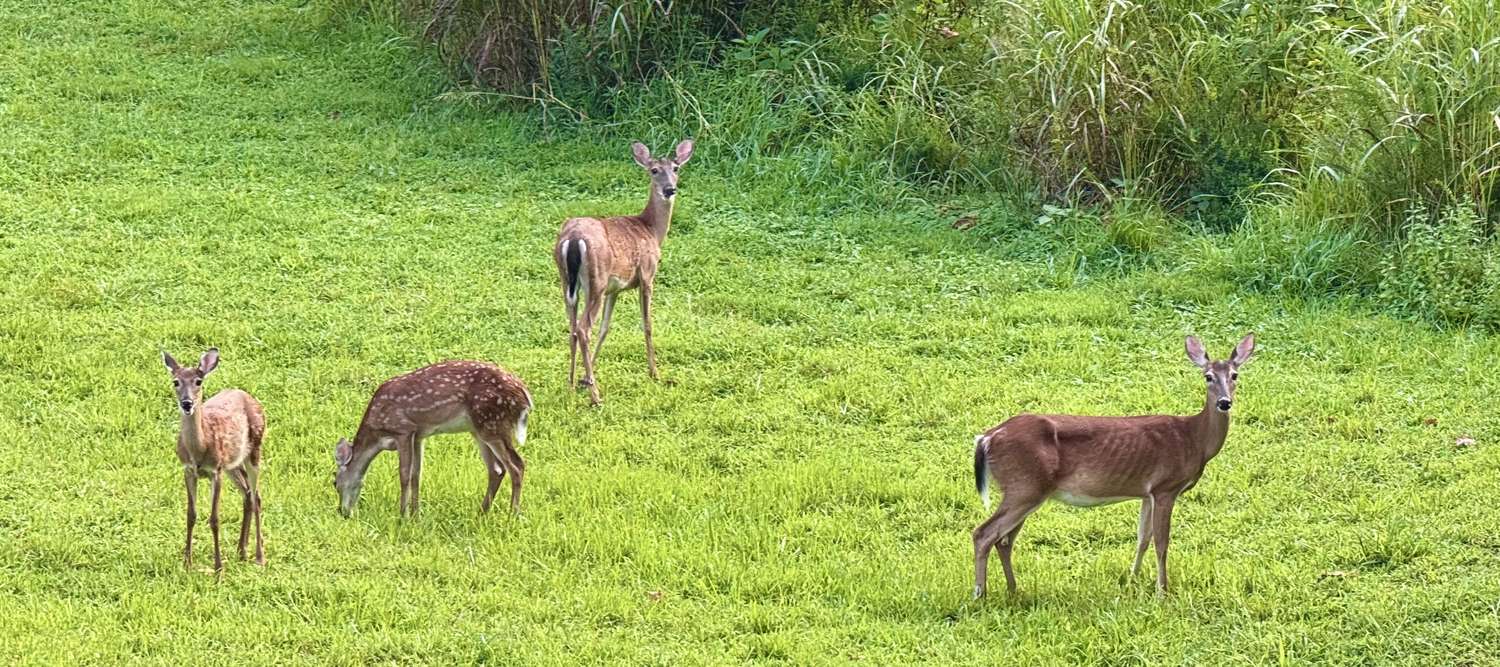
If you do not have any, and I did not, you will need to find some, and I mean actually find them, not intend to. I have been running my own experiments, with results I would call mixed. Boating: not good at it, because boats do not have brakes. Painting: genuinely enjoyable, and those canvases will be staying hidden, because enjoying a thing and being any good at it turn out to be unrelated, which is its own kind of lesson. Gardening: wonderful, right up until you spend $160 and four hours planting deer-resistant everything and then watch a beautiful doe work through it like a salad bar. Handywoman work: I have repainted the same room four times, so let us call that a growth area. Walking the dog: I genuinely excel at this, but there are only so many miles in a day, and the dog has opinions about the limit.
Here is the framing that finally worked for me. Think back to early in your career. The first time you attempted a new surgery. The anticipation, the specific flavor of fear, the click of learning a skill your hands did not have last month. That feeling is not a career feeling. It is a being-alive feeling, and you built a whole profession around getting to have it regularly.
Retirement does not hand that to you. You have to go find something that checks those same boxes, some new skill with enough real stakes that your hands shake a little. Otherwise the days go flat.
Lesson three: purpose and presence
This is the one I have not solved.
In practice, my purpose was obvious and constant. Help the pet. Help the client through a hard day. Support the team. Mentor the newer doctor who reminded me of me. It was handed to me every morning, and it never ran dry. I did not have to go looking for meaning because meaning was scheduled in fifteen-minute increments and it walked in the door on a leash.
Strip that away and the question gets loud. What is my purpose now. What do I want it to look like. I do not have a clean answer, and I am not going to invent one here to make this piece feel finished.
What I can tell you is that I am still looking, and that looking is not the same as being lost. I know the shape of what I am after now, which is more than I could say at the start of either retirement attempt. Purpose, it turns out, was something I received for twenty-plus years and never had to source myself. The consulting work, the writing, this journal you are reading, I suspect those are early attempts at sourcing it on my own. Learning to do that is the actual work of this chapter, and I am in the middle of it.
If you are anywhere near this
None of this is easy. I struggle with it. I am still deciding whether the word retired even applies to me, and I have made my peace with not knowing this week.
But if you are a few years out from stepping back, or you just did, take the parts of this you can use. Tend the friendships now. Find the thing that makes your hands shake. And start asking the purpose question early, while you still have the old purpose to lean on, instead of the morning you wake up and realize no one is expecting you anywhere.
I will let you know how it goes. Assuming I figure out whether I am working.
— Dr. V
The Gray Oak Journal
Dr. V is a veterinarian with over twenty years of clinical and operational leadership experience. She has owned and operated several veterinary hospitals, weathered many shifts in the industry, and served on advisory councils. She writes The Gray Oak Journal at grayoakjournal.com.