Leadership · Mentoring · Business

Lessons learned
in the exam room.

Veterinary roots. Universal truths. Lessons on leadership, culture, and the part of running a hospital nobody teaches you in school. The ideas start in veterinary medicine, but they apply anywhere people lead people.

Photo: Alvan Nee / Unsplash

Topics Leadership Team Building Mentoring Practice Management Culture Business Strategy
Veterinary technician with a Labrador

Talk the Ear Off of Corn

How to help your veterinary team redirect chatty clients without losing warmth. Practical phrases, coaching tools, and why protecting the schedule is an act of kindness.

Stethoscope on veterinary exam table

When the Leader Is the Emergency: How to Lead Your Team Through Crisis and Trauma

What happens when the person your team relies on is the one who needs help. A real story about crisis leadership, debriefs, and what near-misses reveal about your culture.

Guardian dog watching over sheep

The Tail on the Counter

Your team will complete what is in front of them. The question is whether you have made sure the right thing is at the top of the list.

Veterinary technician examining slide under microscope

She Did Not Need to Be Managed More. She Needed to Be Trusted More.

Why leaders fail to empower employees, and what it costs them. A practical look at hovering, micromanagement, and the bottleneck you built by accident.
Beagle curled up sleeping on a white comforter

The Family Crest Would Be a Donkey

Stubborn does not need instructions. Understanding why people resist change, and knowing when patience stops being leadership.

Veterinarian gently holding a puppy

Lost in Translation

If your client leaves the room confused, it does not matter how correct you were. Clear communication is not a soft skill. It is a clinical skill and a leadership responsibility.

Person sitting with dog at sunset

The Lost Art of Porch Sitting

Stillness is not the absence of leadership. It is the beginning of it.

Dog silhouetted against golden hour sunset

Some People Would Rather Quit Than Say Sorry

When an employee would rather walk out than offer two words, you are not dealing with stubbornness. You are dealing with something leadership cannot fix.

Tired healthcare worker leaning against wall

"Try Again Tomorrow": Because Today Was a Disaster

Snapping doesn't make you a bad person. Refusing to reflect on it does. A veterinarian on accountability, apologies, and fixing the systems behind the behavior.
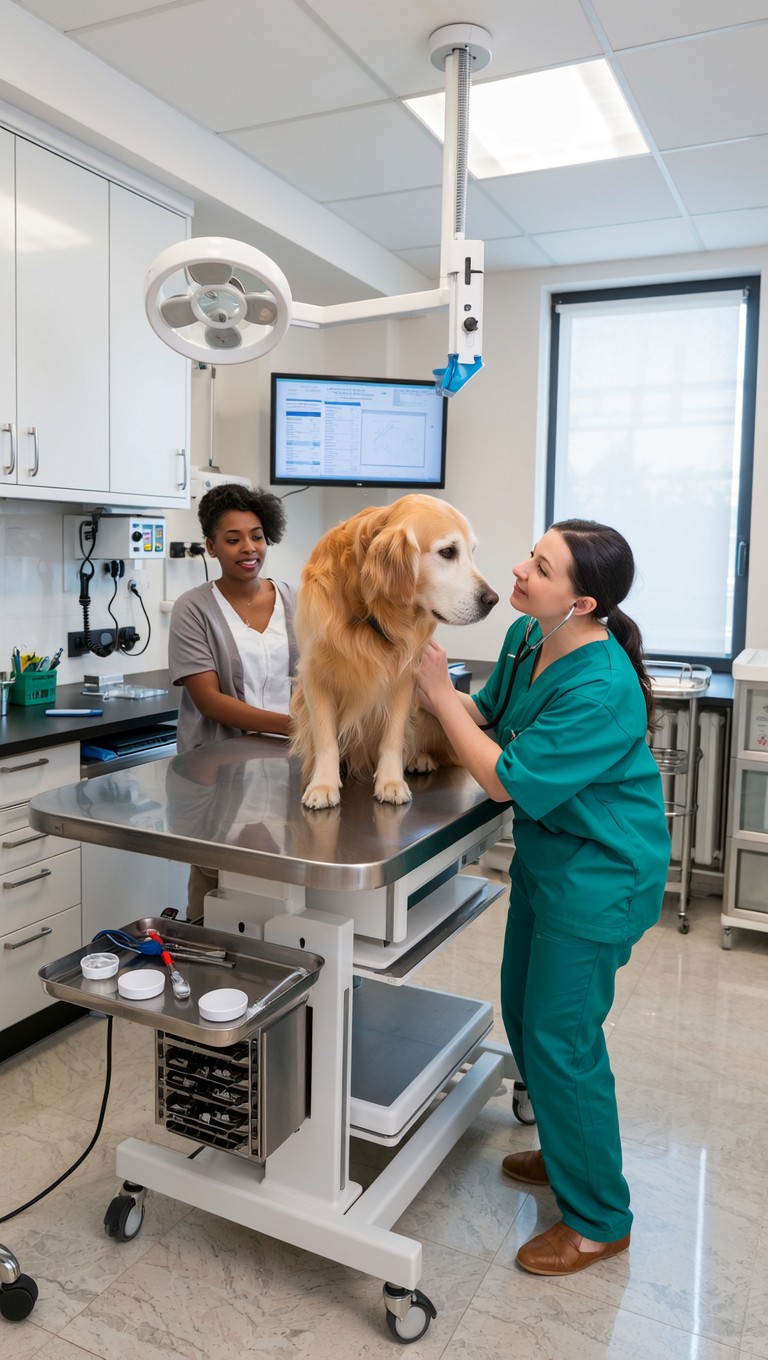
Veterinary client service interaction

The Unicorn in Sensible Shoes

Indifferent customer service is more damaging than rude service, and it is a leadership failure. The service standard in any business is not what leadership hopes for — it is what leadership is willing to tolerate.

Woman relaxing on couch with golden retriever

Decision Fatigue Is Real. And So Is My Relationship With Reality TV

When you make high-stakes decisions all day, your brain needs real rest. Not optimized rest. Not productive rest. Just rest.
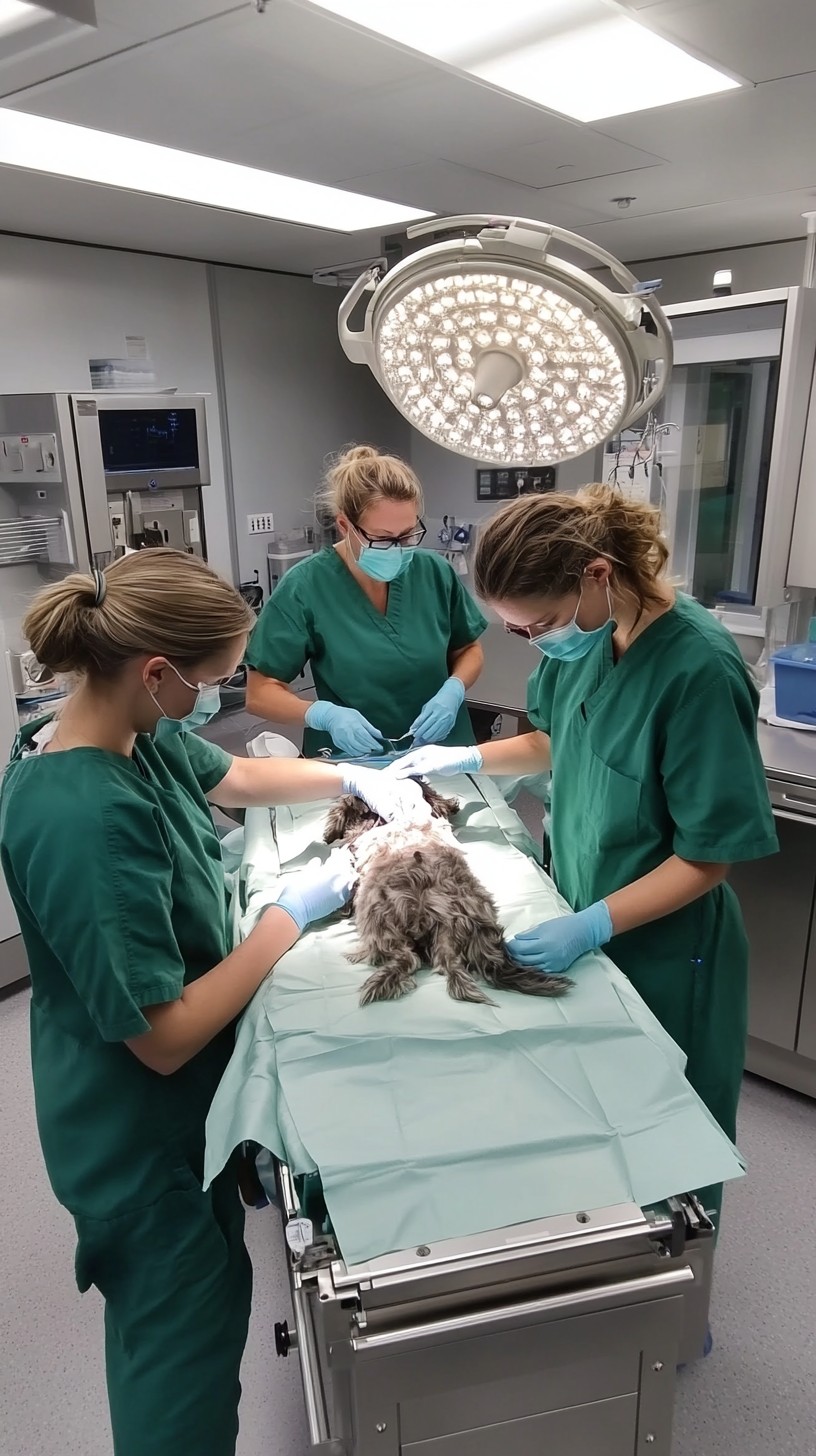
Veterinary surgical team working together

One Bad Apple Will Ruin the Whole Orchard

Knowing when to fire someone in your veterinary hospital before the damage spreads. Your best employees are not asking you to be perfect. They are asking you to be fair.
Healthcare team collaboration

Rip the Band-Aid, Not the Skin

How to fire someone without unnecessary damage to them, to you, or to your team. The goal is to do it clearly enough that they would still choose to work for you again.

Subscribe to Gray Oak Journal

Get new articles in your inbox.

© 2026 Gray Oak Veterinary Investments, LLC. All rights reserved.

About Blog

The Gray Oak Journal is a publication of Gray Oak Veterinary Investments, LLC. The content reflects the personal views and professional experiences of the author and does not constitute legal, financial, or veterinary medical advice.

About

From the exam room
to the written page.

Experience is an excellent teacher, although it has a habit of giving the exam first and the lesson afterward.

About The Gray Oak Journal

Leadership is often described with polished language: vision, strategy, alignment, transformation. In reality, it more commonly involves difficult decisions, uncomfortable conversations, and the occasional realization that the situation is not nearly as under control as it appeared five minutes earlier.

The Gray Oak Journal is a collection of reflections on leadership, mentorship, and the practical challenges of guiding organizations and developing people. The ideas here come largely from experience within the veterinary profession, but the lessons travel well. Hiring the right people, building healthy cultures, making difficult decisions with imperfect information, and developing the next generation of leaders are challenges that look remarkably similar across industries.

This journal was created for people who carry responsibility for others: executives, entrepreneurs, practice owners, and professionals who eventually discover that success requires more than technical expertise. At some point the role shifts from doing the work to helping others do their best work.

The goal is not to present perfect answers. Leadership rarely offers those. The aim is to share thoughtful observations and practical insights that might help another leader recognize a problem a little sooner, or feel reassured that they are not the only one figuring it out as they go.

About the Author

The Gray Oak Journal is written by Dr. Susan Ries Valashinas, known to colleagues and mentees as Dr. V.

Dr. Valashinas has spent her career in clinical veterinary practice, hospital ownership and leadership, mentorship, and veterinary business investment. Before veterinary medicine she earned a degree in Business Administration, a background that proved more useful than she initially expected. That combination of clinical experience and business grounding shapes everything written here.

The reflections shared here are offered for leaders who take their responsibilities seriously and recognize that the work benefits from humility, thoughtful reflection, and the occasional ability to laugh at oneself.

— Dr. V
The Gray Oak Journal

Contact

Have a question, a topic suggestion, or just want to say hello? Reach out.

grayoakjournal@gmail.com

Connect on LinkedIn

Subscribe to Gray Oak Journal

Get new articles in your inbox.

© 2026 Gray Oak Veterinary Investments, LLC. All rights reserved.

The Gray Oak Journal is a publication of Gray Oak Veterinary Investments, LLC. The content reflects the personal views and professional experiences of the author and does not constitute legal, financial, or veterinary medical advice.

Blog

All posts

Subscribe to Gray Oak Journal

Get new articles in your inbox.

© 2026 Gray Oak Veterinary Investments, LLC. All rights reserved.

The Gray Oak Journal is a publication of Gray Oak Veterinary Investments, LLC. The content reflects the personal views and professional experiences of the author and does not constitute legal, financial, or veterinary medical advice.

Smiling veterinary receptionist at front desk with dogs in background

The Best Veterinarian in Town Can Still Lose to a Friendlier Front Desk

A Personal Confession Before We Begin

I had an amazing dermatologist.

Past tense. Intentional.

She was, by every clinical measure, exceptional. Knowledgeable, thorough, the kind of specialist you feel fortunate to have found. And yet, after one too many interactions with her front office staff, I left. I now see a dermatologist who is, by my completely unscientific assessment, probably not as good. And I could not be happier about it.

What drove me out was a voice that curdled into barely concealed contempt the moment I had the audacity to call with a question. A tone that made it clear I was not a patient seeking help. I was an interruption that had somehow gotten their phone number.

I am a reasonably intelligent adult. I know when I am being tolerated. Eventually, I stopped tolerating it back.

Her front desk did not just fail to support her excellent medical care. They actively dismantled it. She may never know I left. She almost certainly does not know why.

That is the quiet danger of a leader who believes that great medicine is enough.

It is not. It never has been. And the veterinary hospitals that have not figured that out yet are losing clients, revenue, and talented team members, usually without ever understanding why.

The Mindset Shift That Changes Everything

Here is the statement that makes some veterinary leaders uncomfortable:

Your hospital is not primarily a healthcare provider. It is a service business that happens to deliver healthcare.

That distinction is not a criticism of the medicine. The medicine matters enormously. But the medicine alone does not build a thriving hospital. It does not retain clients. It does not create culture. It does not drive referrals or five-star reviews or the kind of loyal client base that sustains a practice through hard seasons.

Service does that.

And until veterinary leaders genuinely internalize that, not just intellectually acknowledge it but operationally commit to it, they will continue building hospitals that are clinically excellent and chronically frustrated by flat growth, staff turnover, and client attrition they cannot quite explain.

The hospitals winning right now are not winning because their medicine is better than everyone else's. They are winning because they have made a deliberate decision to compete on experience. They have stopped thinking like clinicians running a clinic and started thinking like service leaders running a medical practice.

That shift in mindset changes everything. How they hire, how they train, how they lead, and what they choose to measure.

What Clients Actually Experience

Walk into any small animal veterinary hospital and you will see medicine everywhere. Exam rooms, surgical suites, diagnostic equipment, and at least one conversation about a stool sample before most people have finished their first cup of coffee. Which, if you think about it, is a very effective diet strategy.

Veterinarians think about medicine. Clients experience something else entirely. They notice how the phone was answered, whether someone greeted them at the door, how long they waited, whether anyone explained things clearly, and whether they felt respected or mildly prosecuted for their dog's dietary habits.

Most pet owners cannot evaluate the technical quality of a surgery. But they can evaluate in seconds whether they felt welcomed or dismissed. And that feeling determines whether they come back.

When a hospital leader focuses exclusively on clinical outcomes and ignores the service experience surrounding them, they are essentially building a beautiful meal and serving it on a dirty plate. The food may be extraordinary. The guest is still leaving unsatisfied.

Medicine Brings Clients In Once. Service Brings Them Back.

Veterinary hospitals grow through a simple formula: clients return, clients refer, and reputation drives new business. All three depend heavily on the service experience.

A hospital can provide excellent medical care, but if the experience feels cold or disorganized, clients quietly begin looking elsewhere. They do not schedule a feedback meeting. They do not offer constructive criticism. They simply disappear, often after leaving a four-paragraph Google review that ensures future clients disappear before they ever arrive.

Leaders who are laser-focused on clinical quality but indifferent to client experience are, without realizing it, doing a disservice to everyone in the building. Their team loses the energy that comes from working in a culture people are proud of. Their clients lose the experience they deserve. Their patients lose the continuity of care that comes from long-term client relationships. And the hospital loses the growth it has worked hard to earn.

All of it, quietly, because service was treated as secondary.

The Hiring Mistake Many Hospitals Make

When hospitals hire, they focus heavily on technical skills. Years of experience, surgical assisting ability, equipment familiarity. These skills matter, but they are not the hardest skills to develop.

Most technical veterinary skills can be taught through training and mentorship. Given time, motivated team members can learn venipuncture, anesthesia monitoring, dental radiology, medical terminology, and hospital software systems, eventually, after the mandatory period of clicking the wrong button and blaming the software.

What cannot be reliably taught is service mindset. Genuine empathy. Emotional intelligence. Patience under stress. The instinct to help rather than deflect. The ability to smile warmly at a client who has asked the same question four times and make it look real on the fifth.

You can train someone to say the right words. It is considerably harder to teach them to mean them. And clients are remarkably skilled at detecting the difference. They may not know the name of a single instrument in your surgical suite, but they will absolutely tell their neighbors how your receptionist made them feel.

A leader who hires primarily for clinical competency and treats service orientation as a nice-to-have is not just making a hiring mistake. They are making a strategic one.

The Phone Call Test

Two receptionists. Same sentence:

"Thank you for calling, how may I help you?"

One sounds warm and genuinely glad the caller reached out. The other sounds like the phone has personally offended them by ringing.

Same words. Entirely different experience.

A great receptionist does more for hospital growth than most marketing strategies ever will, and costs considerably less than a Google ad campaign that will be optimized indefinitely while results remain promising.

If your front desk team is treating client calls as interruptions, that is not a staffing problem. That is a leadership problem. It means service has not been established as a genuine priority, and the team is reflecting that back to your clients, one phone call at a time.

Hire for the Right Foundation

The most successful veterinary hospitals hire for service orientation first and technical skills second.

The ideal team member brings natural warmth, curiosity about people, emotional steadiness, and a genuine desire to help, even when it is the third Monday of a four-day week and someone has just arrived with a cat who does not want to be here and is ensuring everyone within a two-block radius shares that information.

Once that foundation exists, the medicine can be taught. Trying to do it the other way around, hiring for technical skill and hoping service instincts develop later, is much less reliable. Much like hoping the schedule holds together the day three emergencies arrive simultaneously and the autoclave decides it has done enough for one week.

The mindset shift required here is not small. It asks veterinary leaders to weigh a warm, curious, emotionally intelligent candidate with less technical experience against a technically polished candidate who treats client interaction as a necessary inconvenience. Choosing the former requires genuine conviction that service is not secondary. That it is, in fact, the foundation everything else is built on.

Medicine Is the Mission. Service Is How the World Experiences It.

Veterinary hospitals exist to practice medicine and improve the lives of animals. That mission never changes.

But clients experience veterinary care through everything surrounding the medicine. The scheduling, the communication, the empathy, the follow-through. Those moments determine whether they return, refer others, or quietly migrate to the clinic down the road that answers the phone like they are genuinely delighted by the concept of callers.

Great medicine × Great service = A thriving hospital

Remove the service, and even excellent medicine struggles to be seen. A restaurant with the world's greatest chef and a waitstaff that makes diners feel vaguely inconvenient will not be open long. Veterinary hospitals operate on the same principle, with the added complexity that your patients occasionally bite people.

A Final Thought

Clients rarely leave because the medicine was too good.

They leave because the experience was not.

The hospitals that truly thrive have made a decision, a real, operational, cultural decision, that they are in the service business. Not instead of medicine. In addition to it. They hire accordingly, train accordingly, and lead accordingly.

For the veterinary leaders still primarily thinking in clinical terms: the mindset shift is worth making. Not because the medicine matters less, but because your clients, your team, and your patients all deserve a hospital that understands how deeply service and medicine are connected.

Great medicine delivered through an indifferent experience is an opportunity lost.

Great medicine delivered through an exceptional experience is how you build something that lasts.

The technical skills will follow. The empathy either shows up on day one or requires an amount of coaching that will quietly test yours.

And if your front desk still sounds like the phone has personally offended them by ringing, that is probably the best place to start.

Of course, acknowledging that service matters is the easy part. The harder question is knowing whether you actually have a problem. In the next article, we will explore how to tell, and fair warning, some of the signs are things most leaders walk past every single day without noticing.

— Dr. V
The Gray Oak Journal

The Unicorn in Sensible Shoes →
Veterinary client service interaction

The Unicorn in Sensible Shoes

I recently had a genuinely wonderful shopping experience.

The sales clerk was proactive, knowledgeable, helpful, and refreshingly sensible. She offered opinions, but not too many. She guided, but did not hover. She was not trying to sell me three extra things, a store credit card, and what felt like partial ownership in the company. She was simply helping me make good decisions.

As a result, I bought what I came for, plus a few things I had not even considered because her advice was thoughtful and useful.

I walked out in that rare post-shopping state known as delight.

And for the next couple of weeks, I told anyone who would listen about this amazing experience.

Then the glow wore off.

Because eventually I realized I had not had an extraordinary shopping experience. I had had an appropriate one.

That was the part that stayed with me. Somewhere along the way, we as consumers lowered the bar so far that basic professionalism, attentiveness, and competence now feel exceptional. We are pleased when someone is engaged. We are impressed when someone follows through. We are almost weirdly grateful when a person in the service industry looks alert, helpful, and mildly interested in solving our problem.

That should not feel magical. That should feel Tuesday.

And yet here we are.

We have become so accustomed to indifferent service, and occasionally downright rude service, that when someone simply does their job well, we talk about it as though we have spotted a unicorn in sensible shoes.

Why Customer Service Standards Have Fallen

So why have customer service standards fallen? The short answer is that businesses stopped treating service as a core product and started treating it as a personality bonus, something to admire when it appeared and excuse when it did not. Combine that with high turnover, undertrained managers, and a culture that rewards speed over warmth, and indifference becomes the default. Customers adjusted their expectations downward in response, which made it easier for businesses to stop noticing the gap.

That cycle is worth breaking.

The Three Types of Customer Service Employees

As a veterinary hospital owner, I have employed many people in a service-based profession. Veterinary medicine is, of course, medical work. But it is also deeply a service industry, and one where the stakes are high. Clients do not experience your hospital only through your medicine. They experience it through your responsiveness, your tone, your clarity, your empathy, your follow-through, and your willingness to help. The medicine may save the patient. The service often determines whether the client comes back.

That dynamic is not unique to veterinary practice. It applies to any business where people interact with people.

After years of hiring, managing, and coaching employees, I have found there are generally three kinds of service people.

The superstar is warm, engaged, and genuinely enjoys helping people. You can usually spot them in an interview. The rude employee is easier to catch than people expect. References help, prior employers leave clues, and when they do slip through, the behavior surfaces quickly enough to act on.

But the third type is the most dangerous: the indifferent employee.

The indifferent employee is rarely dramatic. They are not openly hostile. They are not usually offensive enough to trigger immediate complaints. They are simply underwhelming. Flat. Minimally engaged. Technically present, but not truly helpful. They are the human equivalent of a shrug.

And that is exactly why they are so damaging.

Why Indifferent Customer Service Is More Dangerous Than Rude Service

Rude service gets noticed. Indifferent service quietly drains the life out of a business.

Clients rarely leave over one dramatic moment. In fact, dramatic moments are often the ones you hear about, which means they are the ones you have a chance to address and correct. A client who tells you something went wrong is giving you an opportunity. The ones who leave quietly never do.

More often, clients drift away through a thousand forgettable interactions. A phone call that sounds rushed. A front desk exchange that feels cold. A question answered without warmth. A concern handled as though it were mildly inconvenient instead of deserving reassurance. No single interaction feels catastrophic, but together they create an unmistakable message: we are here, but we are not especially invested.

That is the real danger of indifference. It does not repel with force. It erodes with consistency.

And customers respond accordingly. They stop feeling loyal. They become more price-sensitive. They shop around. They are more easily swayed by convenience, by a competitor, or by one bad online review. Indifference creates clients who are never fully anchored.

This is where leadership has to stop pretending that service quality is just a matter of hiring a few naturally gifted people and hoping for the best.

Hope is lovely. It is not a management system.

Great Customer Service Does Not Happen by Accident

Great customer service is not a personality bonus. It is not something to admire when it appears and excuse when it does not. It is a leadership expectation, a hiring standard, a coaching standard, and when necessary, a disciplinary standard.

Too many leaders treat service as a soft value. Something nice to mention in meetings. Something that matters if everyone has the time, energy, and favorable alignment of the planets. But service is not extra. It is part of the product.

In veterinary medicine, the medicine matters deeply. Of course it does. But a client's experience of the practice is shaped just as powerfully by how they are spoken to, how clearly things are explained, how promptly concerns are addressed, and whether anyone seems to genuinely care. If those things are missing, clients do not describe the practice as excellent. They describe it as fine.

And "fine" is where loyalty goes to die.

If you are a leader, the service standard in your business is not what you say you value. It is what you are willing to tolerate.

That is the uncomfortable truth.

Teams do not learn service standards from posters in the break room or mission statements framed near the coffee machine. They learn them from what leadership notices, what leadership reinforces, what leadership corrects, and what leadership excuses. If an employee is consistently dismissive, vague, disengaged, or unhelpful and nothing happens, then leadership has made the standard clear. Silence is permission.

How to Lead, Coach, and Improve Customer Service Standards

So what does real leadership around service look like?

It starts at hiring. Disposition matters as much as skill. Kindness, curiosity, emotional steadiness, genuine helpfulness. Product knowledge can be taught. Processes can be taught. It is much easier to teach someone how to do the job than it is to teach them how to care that the job is done well. You are not just filling a role. You are selecting for values.

"Be nicer" is not coaching. Coaching looks like this: when a client walks in, someone who knows their name and their pet's name uses it. Not because it was in a script, but because it signals immediately that this is a place where people pay attention. The conversation that follows should feel like the client is the point of the interaction, not an interruption to it. Questions get answered directly. What is happening and what comes next gets explained without the client having to ask. And before the interaction closes, someone offers one more useful thought, the kind that makes a client feel genuinely looked after rather than efficiently processed. None of that is complicated. All of it is specific, observable, and entirely coachable. Vague standards produce vague performance, and vague performance is just indifference with better intentions.

Then you have to pay attention. You cannot lead what you do not inspect. Listen to phone calls. Read client communications. Watch front-desk interactions. Listen to how veterinary assistants and technicians explain things to clients. Are they answering questions clearly? Are they giving clients space to ask follow-up questions, or are they rushing through information and moving on? And veterinarians are not exempt from this. Clinical excellence does not cancel out a dismissive tone or a conversation that left a client feeling confused and afraid to ask for clarification. Check social media reviews and online feedback to see what clients are saying when they are outside your building. Too many leaders avoid this because they do not want to seem critical. But early coaching is far kinder than delayed frustration, for everyone.

And look at what you are recognizing. If your only praise goes to the fastest employee, do not be surprised when thoughtful service disappears. People repeat what gets noticed. If you celebrate efficiency and ignore empathy, you will get a very brisk, very forgettable business.

Finally, have the courage to correct indifference when coaching has not moved it. Not every service issue is a training issue. Some are effort issues. Some are attitude issues. Some are a values mismatch that no amount of feedback is going to fix. If an employee has been shown the standard, coached clearly, supported appropriately, and still chooses indifference, that is no longer a development opportunity. It is a performance problem, and it deserves to be treated as one.

Leadership and Accountability in Customer Service

This is where many businesses lose their way. They tolerate mediocre customer service because it is not disruptive enough to force action. The employee is not openly rude. They are not creating scenes. They are just consistently underdelivering. But underdelivering service costs you clients just as surely as bad service does. It simply does it more quietly.

Leaders have to be willing to say: this is not good enough here.

That does not mean becoming harsh. It does not mean humiliating people or leading without grace. It means being clear. It means documenting patterns. It means giving direct feedback. It means following up. And yes, sometimes it means letting someone go.

Because protecting your culture, your clients, and your standards matters more than avoiding an uncomfortable conversation.

The employee who helped me in that store should not have felt rare. She should have felt normal. But she stood out because so many businesses have allowed the ordinary standard of service to slip into indifference, and customers have adjusted their expectations downward in response.

That is the part worth challenging.

We should not be dazzled by basic helpfulness. We should not be grateful for professionalism as though it were some rare and precious gift bestowed upon us by a weary civilization. We should expect it. We should hire for it, coach for it, reward it, and insist on it.

And in the end, that is the real issue: the service standard in any business is not what leadership hopes for.

It is what leadership is willing to tolerate.

— Dr. V
The Gray Oak Journal

← The Best Veterinarian in Town Can Still Lose to a Friendlier Front Desk
Tired healthcare worker leaning against hospital wall

"Try Again Tomorrow": Because Today Was a Disaster

This one's for Dr. Stephanie Smith, Jacksonville, NC. She knows why.

There's a running conversation a DVM colleague and I used to have at the end of particularly brutal days in the clinic. Every morning, we'd give ourselves the same pep talk: "Try not to be an asshole today." Then we'd circle back at the end of the shift and report how we did.

Spoiler? Sometimes the answer was, "Welp. I failed."

Let me be clear: we were not out here intentionally setting out to be jerks. But in the whirlwind that is veterinary medicine, complete with frantic pace, emotionally charged moments, and one printer that never works, we're human. And sometimes we snap.

Snapping doesn't make you a bad person. Refusing to reflect on it does.

Self-Reflection in Veterinary Leadership: Why Owning Your Mistakes Matters

We all have those moments. You're short with a teammate. You roll your eyes on the phone with a client, even though they can't see you. You quietly beat yourself up for missing something in a case. Sometimes the hardest person on you is you.

Self-reflection is not wallowing. It's not performative guilt or a spiral of self-criticism. It's just pausing long enough to ask: what was I actually feeling in that moment, and was it really about the client or the tech or the patient, or was I just maxed out?

Owning your behavior is the first step toward doing better next time. That's all it has to be.

How to Apologize Effectively as a Veterinary Leader

You are not a robot. You are going to lose your cool sometimes. The strength is in the follow-up.

Apologize to your team when you've been short with them. Apologize to a client when you know the interaction went sideways. Apologize to yourself when you've spent all day silently punishing yourself for not being perfect. And mean it. We don't need theatrical guilt. We need accountability and a little grace.

"I'm responsible for what I said, and I'm sorry." That's it. Say it, mean it, move on.

Veterinary Hospital Burnout: Fixing the Systems Behind the Behavior

Here's where a lot of people stop. The apology happens, the moment passes, and nothing actually changes. Then the same triggers appear a week later and you're right back in it.

If you keep having the same reactions, it's worth asking whether the environment is set up to bring out your worst instead of your best. In veterinary medicine, the usual suspects are pretty predictable.

Veterinary Scheduling: How Structure Protects Your Team's Effectiveness

Are your appointments stacked without breathing room? No margin for the walk-in pyometra, the euthanasia that needs extra time, or lunch? A schedule that works on paper doesn't always work in practice.

The scheduling conversation is one most veterinarians never actually have. The calendar appears each morning and you work it. But how your day is structured, whether surgeries are front-loaded or scattered, whether there's buffer built in or every slot is filled to the minute, directly affects your clinical judgment, your patience, and your ability to show up for the next patient the way the last one deserved.

A few things worth asking: Do you have any input into how your days are built, or is that entirely someone else's decision? Is there a system for when things run long, because they will run long, or does the burden fall entirely on you to absorb it? Are your high-focus cases scheduled when your brain is actually at its best?

If you've never had a real conversation about any of this, that conversation is overdue. And if you're the one doing the scheduling, listen to your team. What looks efficient on a spreadsheet can be quietly exhausting in practice. The right schedule preserves your effectiveness and your empathy. The wrong one just helps you survive until Friday.

Veterinary Staffing: Putting the Right People in the Right Roles

It's not just about how many people you have. It's about who is doing what and when. A non-morning person running surgery drop-offs at 7:40 a.m. is a problem you built. Play to people's strengths, align skillsets with tasks, and be honest about team dynamics. A well-set-up team runs like a relay race. A poorly set-up one feels like bumper cars at the county fair.

Training and Expectations in a Veterinary Hospital

Before you spiral about the team member making the same mistake repeatedly, pause and ask: do they actually know what's expected of them? Is there a real training system, or are new hires tossed into the deep end and expected to figure it out while juggling blood draws and ringing phones? People learn at different paces and in different ways. Get curious before you get angry. If someone is struggling, support them before you write them off. Chances are, they want to do a good job just as much as you want them to.

Setting Client Boundaries in a Veterinary Practice

Clients don't teach you how to treat them. You teach them. If someone is calling at 3 p.m. on a Friday for an urgent refill because they're leaving for a trip at 5 p.m., they learned that was acceptable because it was allowed. Once. And then again. And then it became the expectation.

Boundaries only work if they're held consistently, and that means everyone on the team holding the same line. The most damaging dynamic in a veterinary practice is the one where policies exist on paper but bend in practice depending on who the client is talking to. Staff learn quickly which clients get exceptions and which DVMs will override the front desk. Once that pattern is established it is very hard to undo, and the people who pay the price first are the ones at the front desk who had to say no and then watched someone else say yes.

Setting boundaries isn't about being inflexible or losing clients. It's about building a practice where your team feels supported and your clients understand what a respectful working relationship looks like. The clients who push hardest against reasonable policies are rarely your best clients. And the team members who watch leadership fold under pressure don't feel protected. They feel disposable. And eventually, they leave.

How to Handle Noncompliant Clients Without Losing Your Mind

If you're explaining flea allergy dermatitis for the third time to the same owner who still won't buy flea prevention, stop expecting a different result from the same approach. Change the medium. Try a diagram, a handout, a link to a reputable source. If nothing lands, there's no shame in calling in reinforcements. And either way, you'll have a story for the end-of-day debrief.

The Bottom Line

Being a vet is a calling and a privilege and, on the hard days, something that requires every resource you have. You're not always going to get it right. But if you can pause, reflect, apologize with honesty, and actually look at the systems around you, you're not just surviving. You're building something worth showing up for.

Tomorrow morning: let's try not to be assholes.

— Dr. V
The Gray Oak Journal

Woman relaxing on couch with golden retriever

Decision Fatigue Is Real. And So Is My Relationship With Reality TV

As a veterinarian, my day is a relentless parade of decisions. Medical decisions. Client decisions. Team decisions. Financial decisions. Ethical decisions.

And then the questions. From clients: What would you do if this was your dog? Is this really necessary? Can we wait? From team members checking on plans and callbacks. From bankers and vendors asking about approvals and emails.

All of this, before 10 am.

By the end of the day, it is not just fatigue. It is depletion. Not physical exhaustion, not even emotional exhaustion. It is cognitive exhaustion. Decision fatigue.

The Quiet Weight of Constant Decision Making

Decision fatigue does not show up dramatically. It shows up when you reread the same sentence three times. It shows up when simple tasks feel unnecessarily complicated, when one more question feels like one too many.

Because the truth is simple: you do not want to make one more decision.

In veterinary medicine, this compounds quickly. Our decisions are rarely low stakes. They carry medical, financial, and emotional consequences, and there is no autopilot when you are balancing patient care, client expectations, and team dynamics all at once. You are thinking all day. Not the casual kind of thinking. The kind where the answer matters and someone is waiting for it.

The Moment I Realized It

There was a moment when I realized this was not just a long day.

My husband asked a simple question. What do you want for dinner?

And I froze. Not metaphorically. Completely. Deer in headlights. I could make life and death medical decisions all day long, but I could not decide what to eat.

That was my moment. That was when I realized I was not just tired. I was depleted.

Also worth noting: this is a humbling experience for someone who had spent the entire day confidently telling other people what to do.

Enter: The Real Housewives

Shortly after that, I found my version of recovery. Mindless reality TV in the form of The Real Housewives. New York, Beverly Hills, Salt Lake City. It does not matter.

No one is asking me to interpret lab work. No one is asking me to make a recommendation. No one's life depends on my next sentence. No one is even making good decisions, which is oddly comforting after a day of trying to make all the right ones.

It is simple. It is ridiculous. It requires nothing from me. And that is exactly why it works.

The Guilt We Need to Drop

Somewhere along the way, we picked up the idea that downtime needs to be productive. If you are not learning something, exercising, or improving yourself, you are doing it wrong.

That is simply not true.

When your brain has spent the entire day making complex, high-stakes decisions, the most productive thing you can do is let it rest. Not optimize your rest. Not turn it into a project. Just rest. Mindless TV counts. Scrolling counts. Sitting quietly and doing absolutely nothing counts.

This is not laziness. This is recovery.

The Risk No One Talks About Enough

When decision fatigue is not acknowledged, we still find ways to cope. The question is not whether we decompress. The question is how.

In veterinary medicine, the risks are real: substance use, emotional withdrawal, chronic burnout, and compassion fatigue that never quite resets. These are not rare outcomes. They are the predictable result of pushing past depletion without building healthy recovery into the day.

And we cannot talk about this honestly without naming something heavier. Our profession faces an increased risk of suicide. This is not caused by one thing. It is the accumulation of high responsibility, emotional strain, constant decision making, access, and isolation. When we ignore our limits, we make ourselves more vulnerable than we like to admit.

This is not about fear. It is about awareness.

Taking care of your mental bandwidth is not indulgent. In this profession, it is protective. And if you find yourself struggling beyond what rest can fix, reaching out is not weakness. It is good judgment.

Recognizing Decision Fatigue in Your Team

Decision fatigue is not only a personal experience. It is contagious. And if you are running on empty at the top, look around. Chances are your team is not far behind.

Decision fatigue has a specific signature in a team, and it is worth knowing the difference between that and a standards or attitude problem, because the surface behavior can look similar even when the cause is very different.

Decision fatigue in your staff rarely announces itself. It shows up in the small things. Routine tasks that normally take minutes suddenly require three check-ins. A team member who typically moves through the day with ease is visibly stalling. Decisions that should be routine get escalated because the brain, at the end of a long demanding day, is looking for any way to offload another choice. You may notice impulsive decisions made late in the afternoon, not because someone stopped caring, but because they just need to be done deciding. You may notice the same questions being asked repeatedly, not out of laziness, but because a depleted mind stops retaining information the way it normally would. A depleted employee and a defeated employee can look remarkably similar, and knowing which one you are looking at requires paying attention to more than just that moment. Truly empowering your team to make decisions, and building a culture where they feel safe doing so, is a topic that deserves its own full conversation. It is on the way.

Watch for the emotional signals too. The stoic employee who goes quiet, shuts down, and becomes unreachable is telling you something. So is the employee who bursts into tears when asked a routine question. Neither response is about the moment in front of them. Both are about everything that came before it.

And this is where the stakes get serious. A depleted team does not just underperform. It makes mistakes. In veterinary medicine, a missed detail, a miscommunication, an overlooked instruction, these are not inconveniences. They have real consequences for patients and clients. Decision fatigue is not just a wellbeing issue. It is a patient safety issue and a practice risk that veterinary leaders cannot afford to ignore.

That is different from an employee who is disengaged, undertrained, or treating clients as an inconvenience. Those are standards and accountability issues, and they deserve to be treated as such. The cost of that kind of indifference to a practice is its own conversation, and one worth having. If you have not already read The Unicorn in Sensible Shoes, that is a good place to start.

Decision fatigue is a capacity issue. Recognizing which one you are looking at matters, because the response is completely different.

Watch the decision flow. When everyone is deferring upward, when every small call gets escalated, when one person in the building is being pecked to death by a thousand tiny questions, something has broken down. Ask whether this is the established culture of the hospital, or whether one person's need to be needed is creating a bottleneck that drains the whole team.

That question leads somewhere important. Have you actually empowered your team members to make decisions? Not in theory. In practice. Do they believe they can make a call without negative consequences? Have they been trained properly and given the tools to act with confidence? Because if the answer to any of those is no, the decision fatigue in your building is partly a veterinary leadership problem, not just a staffing one.

And then there is the employee who asks you, for what feels like the hundred millionth time, how to replace the toner in the printer. At some point the question is no longer about toner.

How to build a practice that does not funnel every decision through one person is a conversation worth having in full. We will get there.

Building a Recovery Culture in Veterinary Leadership

You need an off switch. Not someday. Not when things slow down. Daily. And if you are leading a team, that permission is not just for you.

The best thing you can model for the people around you is that recovery is not weakness. Talk about it openly. Normalize leaving work at work. If your team sees you grinding through depletion and calling it dedication, that is the culture you are building. If they see you protecting your own capacity and encouraging them to do the same, that is a different kind of leadership entirely.

Maybe the off switch looks like reality TV that asks nothing from you. Maybe it is a walk where no one can reach you, exercise that burns off the static, time with people who do not need you professionally, or quiet, which is wildly underrated. There is no gold standard. There is only one question that matters: does this actually let my brain rest? Encourage your team to find their own answer to that question. Then give them room to actually use it.

Give Yourself Some Grace

Decision fatigue is not a personal failure. It is an occupational reality. You are not less capable. You are not losing your edge. You are a human being doing cognitively demanding work in a high-stress profession.

Of course you are tired.

Some days you are sharp, decisive, and on your game. Some days choosing a Netflix show feels like a commitment. Both can be true.

Final Thought

We spend our days making decisions for everyone else. At some point, the most important decision becomes this: how am I going to take care of myself when the day is over?

And as a leader, there is a second question worth sitting with: are the people around me running on empty too?

Sometimes the answer to both is very simple.

No more decisions. Just pass the remote.

— Dr. V
The Gray Oak Journal

Healthcare team collaboration

Rip the Band-Aid, Not the Skin

How to fire someone without unnecessary damage to them, to you, or to your team

Firing someone is part of the job.

It just happens to rank somewhere between cleaning up explosive diarrhea and telling a client their dog has cancer on the emotional scale.

Avoiding it does not make it easier. It makes it worse for you, for them, and for the rest of your team.

As I wrote in a previous post on culture and the cost of keeping the wrong people, holding onto someone who is not working does not protect your team. It erodes it.

Call it whatever softens the conversation. The fit is not working.

The goal is not just to end employment. The goal is to do it clearly and professionally enough that even if they were not the right fit, they would still choose to work for you again.

That is a successful firing.

So let's talk about how to do that, how to rip the Band-Aid off without taking half the skin with it.

Step 1: Don't Pretend This Came Out of Nowhere

If this conversation is a surprise to them, that is on you.

Termination should never feel like it came out of left field, unless the reason involves something serious: harassment, safety violations, theft. That is not leadership. That is an ambush.

Before you get here, you should have:

Given clear feedback with specific examples. Offered support or adjustments where appropriate. Set expectations with a timeline and follow up. Documented it, on paper, not in your head.

If you have done all of that and nothing has changed, then yes, it is time.

Band-Aid. Rip.

Step 2: Get Your House in Order First

Before you sit down, know exactly what you are going to say. Have your documentation ready. Get your tone right: calm, not angry. Firm, not cruel. Rehearse it. In your head, out loud, in your car, in front of your dog. It does not matter.

This is not a conversation you wing. Preparation is what keeps this clean instead of messy.

Step 3: Right Place, Right Time

Firing someone at 8:05 a.m. on a Monday, in treatment, while the phone is ringing and a cat is peeing on the scale?

No.

Do it in private. Have another manager or HR present if possible. Do it at the end of the day when you can. Keep it quiet. This is not a walk of shame moment.

Protect their dignity. Always.

Step 4: Say It Like a Grown-Up

Do not sugarcoat. Do not ramble. Do not build a case in real time.

Be direct:

"We have talked about performance concerns over the last few weeks. Unfortunately, there has not been the improvement we needed. As of today, we are ending your employment here."

Then stop.

Let them respond. Let them feel. Let them process.

But do not negotiate. This decision is final.

If they ask for another chance: "We have already had those conversations and opportunities, and this is the outcome."

If they get emotional: stay steady. You do not have to fix it. You just have to hold the line.

Step 5: Handle the Logistics Cleanly

Have everything ready before you walk into the room, not while they are sitting across from you.

Final paycheck information. Return process for scrubs, keys, badges. Benefits or COBRA information if applicable. Any exit paperwork.

Clean execution matters. Sloppiness here undermines everything you just did right.

Give them space to leave with dignity. No escort unless there is a real reason.

Step 6: Tell the Team Without Stirring the Pot

What your team does not need: the backstory, the play by play, your opinion.

What they do need: a clear and respectful update, confidence that leadership handled it, and an open door if they have concerns.

Try this:

"I wanted to let you all know that [Name] is no longer with the hospital. These situations are never easy, but this was the right decision for where we are going as a team. I am here if you have questions. Otherwise, let's keep moving forward."

Short. Respectful. Done.

Step 7: Reflect Without Ruminating

Afterward, ask yourself: Did I wait too long? Were there earlier signs I ignored? What will I do differently next time?

Most leaders do not fire too quickly. They wait too long. And the longer you wait, the more it costs your team. That reflection is not self-punishment. It is how you get sharper, so the next conversation happens sooner and cleaner.

The Band-Aid Test

Here is your gut check:

If you are dreading every shift they are on. If your team noticeably relaxes when they leave. If you have given clear feedback and real opportunity and nothing changes.

It is time.

Do not drag it out. Do not overcomplicate it. Do not take the skin with it.

Be kind. Be firm. Be done.

And if they walk away thinking, "Damn. I wish I had done better. I would work for them again if I had the chance,"

Then you did not just fire someone.

You led well.

— Dr. V
The Gray Oak Journal

← One Bad Apple Will Ruin the Whole Orchard
Veterinary surgical team working together

One Bad Apple Will Ruin the Whole Orchard

Knowing When to Fire Someone in Your Veterinary Hospital Before the Damage Spreads

One bad apple really will ruin the bunch, especially when the bunch is already short-staffed, emotionally drained, and six euthanasias deep into the week.

In veterinary hospital leadership, one of the hardest decisions is knowing when a struggling employee needs coaching and when it is time to let them go. Wait too long, and the damage spreads through morale, workload, and team culture.

If you have been in veterinary medicine long enough, you have encountered that employee.

The one who does just enough to avoid being written up, but not enough to actually contribute. They disappear when things get hard. They always seem to be cleaning something important when an emergency walk-in arrives or the next euthanasia needs hands.

On paper, they are not technically doing anything fireable.

But everyone knows. The team knows. You know. And the people quietly picking up the slack definitely know.

Yet many veterinary leaders wait. We make excuses.

"We are already short-staffed." "They are not that bad." "Maybe things will improve next month."

But avoiding the problem does not preserve your hospital culture. It erodes it.

And eventually, your best technician, the one carrying half the treatment room, starts wondering why the standards only seem to apply to some people.

So when is the right time to let someone go?

Right before your good people start hating their jobs.

That line is worth sitting with. Because the moment your strongest employees stop feeling protected by leadership, they stop feeling invested in the work. They are not asking for perfection. They are asking for consistency. When a chronically underperforming employee is allowed to coast indefinitely, the message it sends to everyone else is precise and unmistakable: the rules are optional. And the people who have been holding to those rules, quietly and without complaint, begin to recalibrate. Some start pulling back. The best ones start looking elsewhere.

What follows is a framework for working through that decision, and for recognizing when the moment to act has already arrived.

1. Stop Hoping the Problem Will Fix Itself

Hope is wonderful for puppies with parvo. It is not a management strategy.

If you have been thinking about having a conversation with an employee for more than two weeks, it is already overdue.

The longer you tolerate chronic underperformance, the more it communicates to the rest of the team that standards are optional. And nothing burns out strong employees faster than watching someone else consistently do less and face no consequence for it.

Keeping someone because they are not terrible is a reliable way to eventually lose the people who actually make your hospital work.

2. Bring Data to the Table

When it is time for the conversation, come prepared with facts. Not impressions. Not frustration. Not the phrase "your attitude is a problem."

Bring specifics. "You were late nine times this month." "You declined to assist with hospitalized patients three separate times last week." "Two team members reported difficulty getting help from you during emergency cases."

Leadership conversations must be grounded in observable behavior. If you lead with vague feelings, you will get vague defenses in return. If you lead with facts, you can actually solve something.

3. Ask Why, and Mean It

Before deciding someone is disengaged, ask a simple leadership question: why is this happening?

Sometimes the answer is straightforward. Other times, you uncover something solvable.

Veterinary hospitals run early mornings, long shifts, and unpredictable caseloads. Some employees struggle with a schedule that simply does not fit their life. A night owl assigned to 7 a.m. kennel shifts, a parent managing childcare without feeling safe to say so, a technician functioning well at 32 hours but overwhelmed at 40. These are not character failures. They are mismatches worth exploring before drawing conclusions.

Compassion fatigue is worth naming directly. Veterinary medicine is emotionally demanding in ways that accumulate quietly. Someone who appears detached, irritable, or persistently low-energy may not be indifferent. They may be exhausted from caring too much for too long. Acknowledging the emotional weight of the work, offering time off or rotation away from heavy euthanasia weeks, and encouraging access to professional support are all appropriate first responses. Some people recover. Some realize they need a different path. Either way, they deserve to reach that clarity with their dignity intact.

Physical limitations also go undisclosed more often than leaders expect. Veterinary work is physically demanding, and an employee avoiding certain tasks may be doing so because they are in pain and uncertain whether to say so. A direct, private question can open that conversation. Temporary duty adjustments or physical therapy are often all that is needed. The hospital needs sound judgment and skilled hands, not simply a strong back.

It is also worth examining whether the issue is relational rather than motivational. An employee who underperforms only when paired with certain colleagues may be caught in a dynamic that leadership has not yet addressed. Interpersonal friction, when left unexamined, is easily mistaken for poor attitude or low effort.

And finally, ask whether the employee was ever truly trained. Poor onboarding is a persistent problem in veterinary hospitals. Employees who appear slow, hesitant, or evasive may have gaps in their foundation that no one caught early enough to correct. A mentor assignment, targeted retraining, and a clear reset of expectations can resolve more than leaders expect.

That said, sometimes the simplest explanation is the correct one. Some employees perform well when being watched and disengage the moment supervision disappears. If the same behaviors persist month after month despite genuine coaching and clear expectations, the problem is no longer confusion or circumstance. It is choice. And at that point, keeping the employee is no longer an act of support. It is a disservice to everyone around them.

4. Set a Clear, Short-Term Improvement Plan

If the problem appears fixable, establish a structured plan. Avoid vague commitments like "we will check in later." Instead, define exact expectations, set a short timeline of two to four weeks, and schedule the follow-up meeting before leaving the room. Clarity prevents misunderstanding and signals that leadership is paying attention.

5. If It Is Time to Fire Them, Fire Them

If the plan fails, or the employee declines to engage with it, do not drag the process out indefinitely.

Make the decision.

Letting someone go is uncomfortable. But leadership is not measured by how many difficult decisions you avoid. It is measured by the standards you maintain.

Releasing a chronically underperforming employee often has immediate and visible effects. Morale improves. Workload redistributes more fairly. Your strongest employees feel seen and protected. And perhaps most importantly, it restores credibility to leadership.

Because your team has been watching. They always are.

Final Thought: Protect the Orchard

You are running a veterinary hospital, a place where frightened clients arrive with beloved family members and trust your team to care for them. That requires standards. It requires accountability. And sometimes it requires the uncomfortable decision to remove someone who is quietly harming the team around them.

One bad apple rarely destroys a hospital overnight. But left long enough, it can spoil the culture in ways that are far harder to repair than the original problem.

Leadership means protecting the orchard before that happens.

And here is the quiet truth most managers eventually learn: your best employees are not asking you to be perfect. They are asking you to be fair.

When you protect the team, the team will protect the hospital.

— Dr. V
The Gray Oak Journal