Ask anyone who has spent time working in a veterinary hospital and they will tell you which appointment changes the air in the building. It is the three o’clock euthanasia. The team sees it on the schedule and something shifts, the vibe changes, the jokes and the usual banter in the treatment area stop. The technicians start setting up the comfort room, someone pulls the paw-print kit, and the front desk gets quiet because they know a family is about to walk in on one of the worst days they will have all year.
That stillness is the team doing its job well, and it is also the team not knowing exactly how this one will go. These appointments are all unique and somewhat unpredictable, even though as professionals we try to manage them as best we can. What I want to talk about is the version that should never happen, the one that puts everyone on edge for the wrong reason. It is the euthanasia that shows up on the schedule with no prior conversation behind it, no chart notes, no record that the veterinarian and the family ever talked through what was happening and why today was the day. Just a name, a time, and a whole team bracing for something nobody has confirmed is the right call.
I wish I could tell you this is rare, a strange one-off, but anyone in veterinary medicine knows it is not. These appointments find their way onto the schedule more often than we would like, and when one lands with nothing behind it, we have set everyone up to fail. The fix is not complicated, and I will get to it, but let me first show you what it looks like when the conversation never happens.
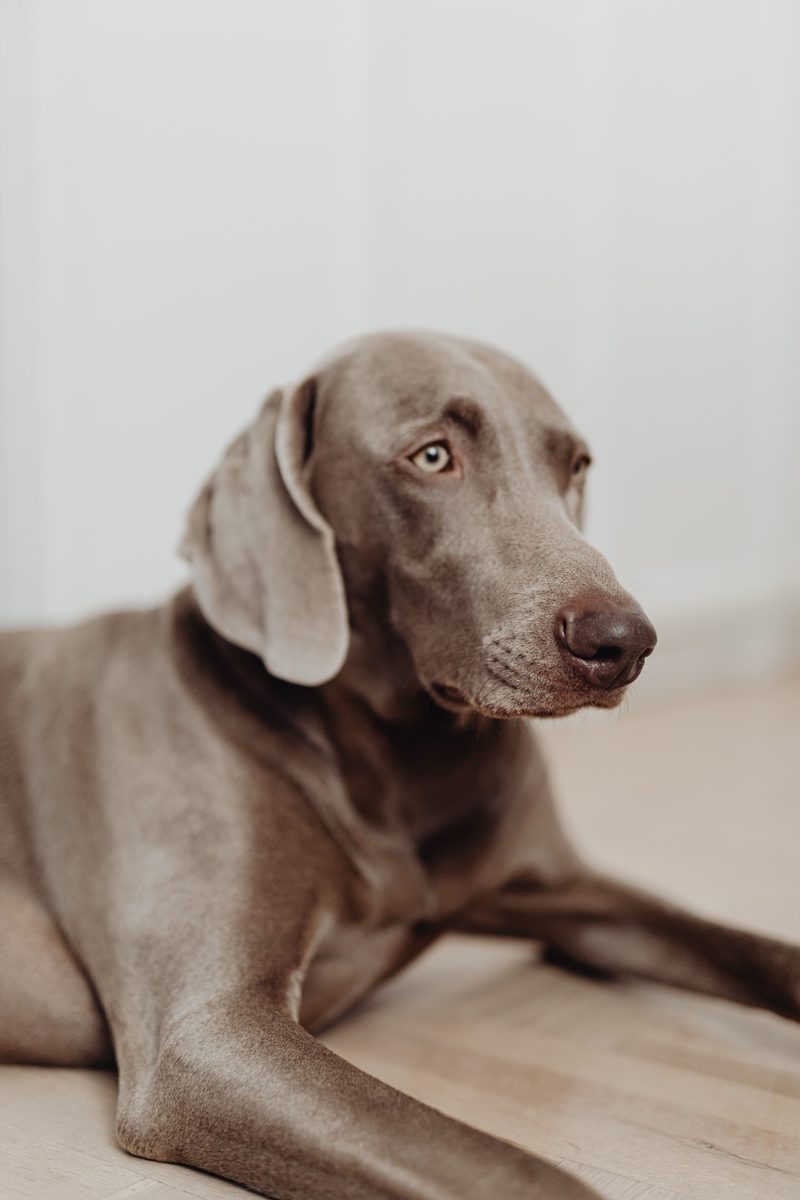
I was covering as a relief veterinarian at a hospital that was not my own. A Weimaraner came in for euthanasia. He was eight years old, and on the schedule it said euthanasia with nothing in the record telling me why. His history was thin in the best way, once-a-year visits for his vaccines and no major health problems ever noted, the chart of a dog who had been well. Then I walked into the exam room, and he greeted me with a goofy pant. He was a fairly healthy dog with decent muscle tone, a little cloudiness in the eyes and nothing that explained why he was there that afternoon. The story was that he had slowed down on the stairs and did not want to jump into the car anymore, which sounded like possible routine arthritis in a middle-aged dog. I raised it with the owner and discussed options such as a workup or a simple trial of anti-inflammatories before we ever got to the thing we cannot undo.
Here is the part that matters, because it is the part a phone call would have changed. This owner had not weighed the medications and rejected them. He simply had not known there were any. What he knew was that he did not want to watch the family dog decline, and he did not want to put him through heroics at the end. So he had made a hard decision and arrived fully committed to it, mentally and emotionally set on losing the dog today, the kids’ goodbyes already spent that morning and the dog already loaded into the car and driven in. When I offered him another path, he had no interest in reconsidering. He had decided and was not going to change his mind.
So we reached a standoff, in a room, with a fairly healthy dog panting between us, and I could not in good conscience euthanize that animal. But it was not my hospital and it was not my final say. The chief of staff on duty came in, and because the owner was adamant and the goodbyes were already said, she euthanized the dog.
I have carried that one for a long time, because we did not set the patient, the client, the team, or me up for success. I felt bad that the chief of staff was put in that position, essentially cleaning up a situation I had created by holding onto my morals and declining to carry out the client’s decision. And I was annoyed, in equal measure, that she had never put a better system in place, one that would have kept either of us from standing in that room at all.
What one phone call would have changed
Picture the same case with a few minutes of a veterinarian’s time spent before the appointment ever arrived. The doctor sees the euthanasia on the books, sees a chart with nothing on it but annual vaccines, and picks up the phone. The owner explains what he is seeing at home and that he does not want his dog to suffer. The veterinarian listens, then says the thing that reframes the whole day. This sounds like it could be early arthritis, there are options worth trying first, and nothing has to be decided this afternoon. It may still come to euthanasia, and if it does the doctor will be right there for it, but it is not a certainty, and it is a decision the doctor has to be part of, made together with the family.
Now the owner arrives holding a different thought. He came in believing one thing was going to happen for certain, and he leaves the call understanding it might not. That is the entire argument for pre-screening euthanasia appointments. When one shows up on the schedule with no notes showing the veterinarian has already had this conversation, somebody calls beforehand. A couple of minutes about what is happening at home, what the family is seeing, and why they believe it is time, and the disaster never unfolds.
One thing on this, and it is not optional. These calls need to be handled by a veterinarian, or at an absolute minimum an experienced technician with the expertise to ask the right questions. Do not pawn this off on a client service rep or a vet assistant, and do not let the call become a throwaway “the doctor will decide when you bring him in.” This is an emotional roller coaster for people. A couple of real minutes from someone qualified, setting the scenarios up honestly, is the whole point.
Let me be clear about what this is not, because it is easy to misread. It is not about keeping pets alive to suffer. When it is time, it is time, and part of our job is giving a family permission to let go and a pet a peaceful, dignified death. I will defend that work to anyone. It is also not an excuse to Band-Aid a dying animal with drugs we throw at a situation we cannot fix, or to run another round of tests just to run them, because both of those are their own kind of failure. The call is not about delaying anything. It is about making sure the decision was actually a shared one, reached together with the doctor, and not a default nobody examined. In plenty of these calls the answer is yes, it is time, and the conversation simply confirms it. The family arrives already supported, the chart reflects the discussion, and the team can give them the send-off they deserve.
Who the phone call protects
It protects the patient first, which is the whole reason any of us are here. A fairly healthy animal should never end up on the schedule for euthanasia without a veterinarian first confirming that is genuinely where things stand. The call is the last reliable checkpoint before an irreversible decision, and sometimes it is the only one. It protects the family too, sparing them the scene where some relatives stay home to grieve and others drive the pet in, everyone already past the point of no return, only for the veterinarian in the room to disagree that it is time. And it spares the team, who set up that comfort room and carry the appointment home with them, from bracing for something nobody confirmed was right.
It also protects the veterinarian, who is the one ultimately making this call and ought to be involved long before the family is standing in the room. I learned that the hard way, in a hospital where I did not have the authority to stop what I believed was wrong and no system to keep me out of that spot. A conversation on the front end means no doctor gets handed a decision that was already made for them.
So if you run a hospital, or you are the doctor seeing that three o’clock slot, look at the chart before the time arrives, and if the conversation is not there, have it. Pick up the phone. It costs a couple of minutes and it spares a patient, a family, a team, and a doctor from a standoff that never needed to happen. We owe each other that much, and we owe these families and their animals a great deal more.
— Dr. V
The Gray Oak Journal
Dr. V is a veterinarian with over twenty years of clinical and operational leadership experience. She has owned and operated several veterinary hospitals, weathered many shifts in the industry, and served on advisory councils. She writes The Gray Oak Journal at grayoakjournal.com.