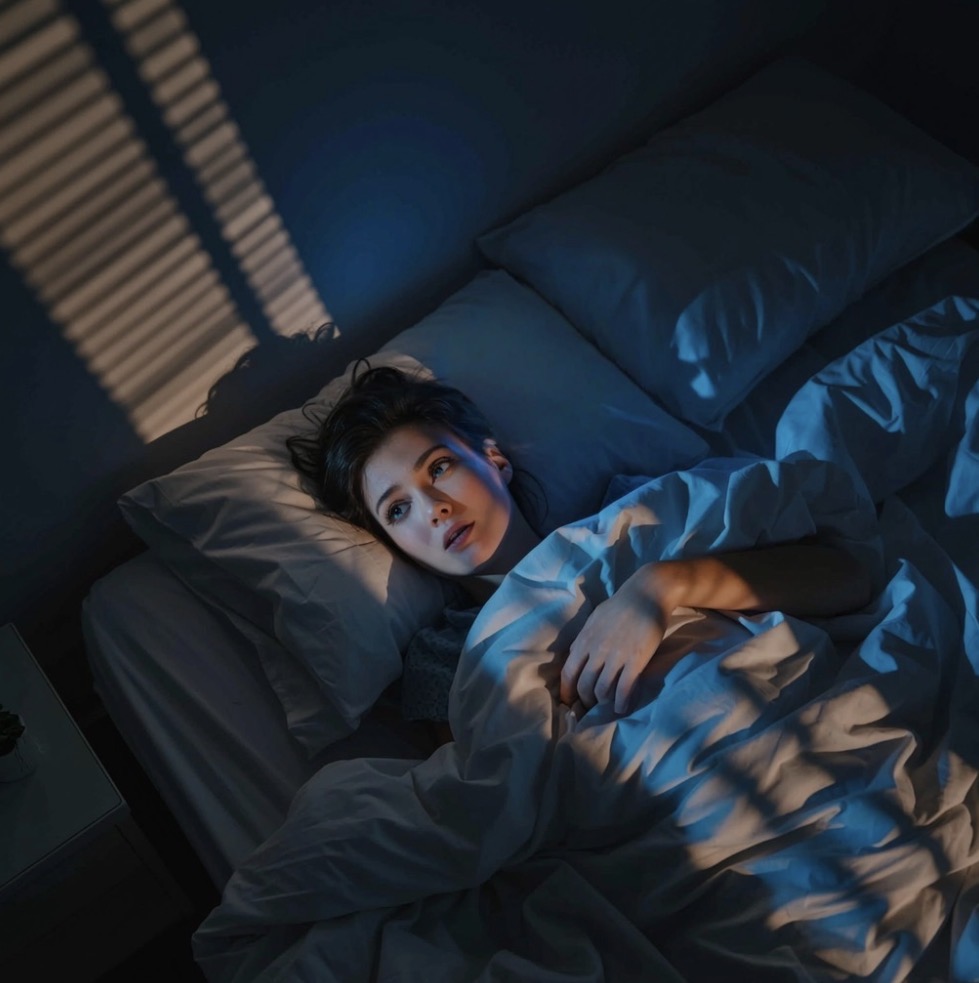
I try not to live in regret land. But I do find myself thinking about it. What could I have done. What should I have said. What would have been a better choice. That questioning and self-doubt feeds the little gremlin of our soul, the one who wakes us at 3am and keeps us up for the next hour.
For those of us in the vet industry, the could've should've would've is especially harsh.
You know the feeling. You wake up out of a dead sleep and it's: Could I have written down the wrong leg for Baxter's mass removal tomorrow? The vomiting cat. Could I have pushed harder for the x-rays, when all the owner wanted was a magical shot to make it go away? The dog who had the routine spay. Should I have kept her one more hour to observe? The puppy with a little bit of loose stool but eating and drinking fine. Should we have run the parvo test anyway? Mrs. Jones, 70 years old, going home with insulin. Would she have understood the protocol better if I had explained it one more time?
We second-guess ourselves on what we saw on a physical exam, what we recommended to a client, what we administered to the pet, the diagnosis, the treatment, the prognosis. It is especially harsh because we are dealing with a person's pet. Their family member. Their companion. Their best friend. It is a stressful byproduct of being in this industry, and we do not talk about it enough.
It does not help that we live in a country where accidents carry consequences far beyond the accident itself. The fear of those consequences shapes how we practice long before any of them actually happen. It rides in the passenger seat of every exam room.
Let's actually define what we are talking about.
That last part is the part that matters. Without intent.
A construction crew mismeasures a foundation and the building goes up two inches off square. Tens of thousands of dollars to rework. Nobody set out to mismeasure. Somebody got tired, or got distracted, or read the wrong line on the plans. The mistake is real. The cost is real. The intent to cause damage is not. We call that an accident, and we expect the project to be repaired and the work to continue.
A driver looks down at a text for one second and rear-ends the car in front of them. Insurance handles it. Nobody calls the driver evil. We call it an accident.
A vet picks the wrong dose, or misses a finding on a film, or sends a pet home that should have stayed for observation. The pet is harmed. The family is devastated. The vet does not sleep for a week. And here is where the language gets dangerous, because somewhere along the way our profession started telling itself that this kind of mistake is not an accident. It is failure. It is reason to question whether you should be in this work at all.
It is none of those things, unless you intended the harm. By the actual definition of the word, it is an accident. The same word we use for the construction crew and the distracted driver.
So What Is Really Driving the Could've Should've Would've?
Is it regret? Or is it fear?
I went to a therapist once and laid out my 'regrets.' Through a lot of conversation, we relabeled most of them as fears.
I was afraid I had hurt a pet. Not in some abstract sense. A specific pet. A specific family. The dog who trusted me on the table. The cat whose owner cried in the lobby. The puppy whose name I still remember. I was afraid I had failed an animal who could not speak for itself, and a family who had handed that animal to me and asked me to fix it.
That fear is the one that costs you something. It is the one that makes you set down your fork at dinner because you just remembered a case from three years ago. It is the one that makes you dread the post-op call instead of looking forward to it. It is the one that makes you wonder, on the drive home, whether you should have gone into another field. The legal and financial fears are loud, but this is the one that actually shapes you. Because every vet I know got into this work because of an animal. The fear of having harmed one is the fear of having betrayed the reason you are here at all.
Yes, there were other fears too. I was afraid of losing the veterinary license I had worked so hard for. I was afraid of jeopardizing my own financial wellbeing and the wellbeing of the employees who counted on me. Those fears are real and I am not going to pretend they are not. But they are downstream of the first one. They are what your brain reaches for when the real fear, the one about the pet, is too painful to look at directly. The pet is the fear that wakes you up at 3am. Everything else is the aftershock.
My therapist asked me a question that has stayed with me.
Did you purposefully injure or hurt a pet?
No.
Of course not. Not once. Not ever. That is not who I am, and it is not who any vet I have known is either. We do not go into this work to harm animals. We go into it because somewhere along the way an animal mattered enough to us that we wanted to spend our lives in service to them. That intention does not disappear when we make a mistake. A mistake made by someone trying their best to help is a fundamentally different thing than harm. Our brains at 3am are not good at telling the difference. They are also not kind narrators, which is its own problem. My therapist's question forces the difference into focus.
And once that difference is in focus, the other fears get smaller too.
Look at what malpractice actually means.
Read that again. Negligence. Misconduct. Lack of ordinary skill. Breach of duty. Those are not the words for a vet who showed up, did the workup, made the call her training supported, and had a case go sideways anyway. Those are the words for someone who skipped steps, ignored protocols, or did not bother to know what they should have known. Malpractice is a specific charge with specific elements. It is not a synonym for "I am up at 3am wondering about a case."
If I did not intend to cause harm, and I applied ordinary professional skill, then I was not committing malpractice. If I was not committing malpractice, then I was not going to lose my license. The legal and financial fears that had been living rent-free in my head turned out to be built on a foundation that did not actually exist. That realization, sitting in that therapist's office, was one of the most genuine moments of relief I have ever had in my career. I want every vet reading this to have that same moment.
What I am, what most of us are, is a human being who tries, who sometimes needs to try harder, and who occasionally makes mistakes. Because that is what humans do. Animals get sick in ways we did not predict. Bodies do not always respond to medicine the way the textbook said they would. Owners hear half of what we say and remember a quarter of it. We work long hours, we carry the weight of every previous case into the next exam room, and decision fatigue is real even when we are doing everything right.
I am not going to tell you to give yourself grace. That phrase has been put through too many inspirational graphics to mean anything anymore. What I will say is this. The next time the gremlin wakes you up at 3am, sort the noise first. Some of what you are feeling may be real regret. A case did not go the way you wanted. A pet did not make it. A family was hurt. That is real, and it deserves to be felt. Sit with it. Let it teach you something. Then let it rest.
But the rest of it, the part that loops, the part that asks the same question on repeat, the part that wakes you up again the next night and the night after, that is not regret. That is fear. Fear that you are not good enough. Fear that you missed something. Fear that this case is the one that takes your license, your career, your sense of yourself.
Ask yourself the therapist's question. Did you mean to cause harm? If the answer is no, then the fear has nothing to feed on. It is not regret. It is not malpractice. It is your brain at 3am, mistaking a memory for a verdict.
Then maybe, just maybe, you can go back to sleep.
— Dr. V
The Gray Oak Journal
Dr. V is a veterinarian with over twenty years of clinical and operational leadership experience. She has owned and operated several veterinary hospitals, has weathered many shifts in the industry, and served on advisory councils. She writes The Gray Oak Journal at grayoakjournal.com.